

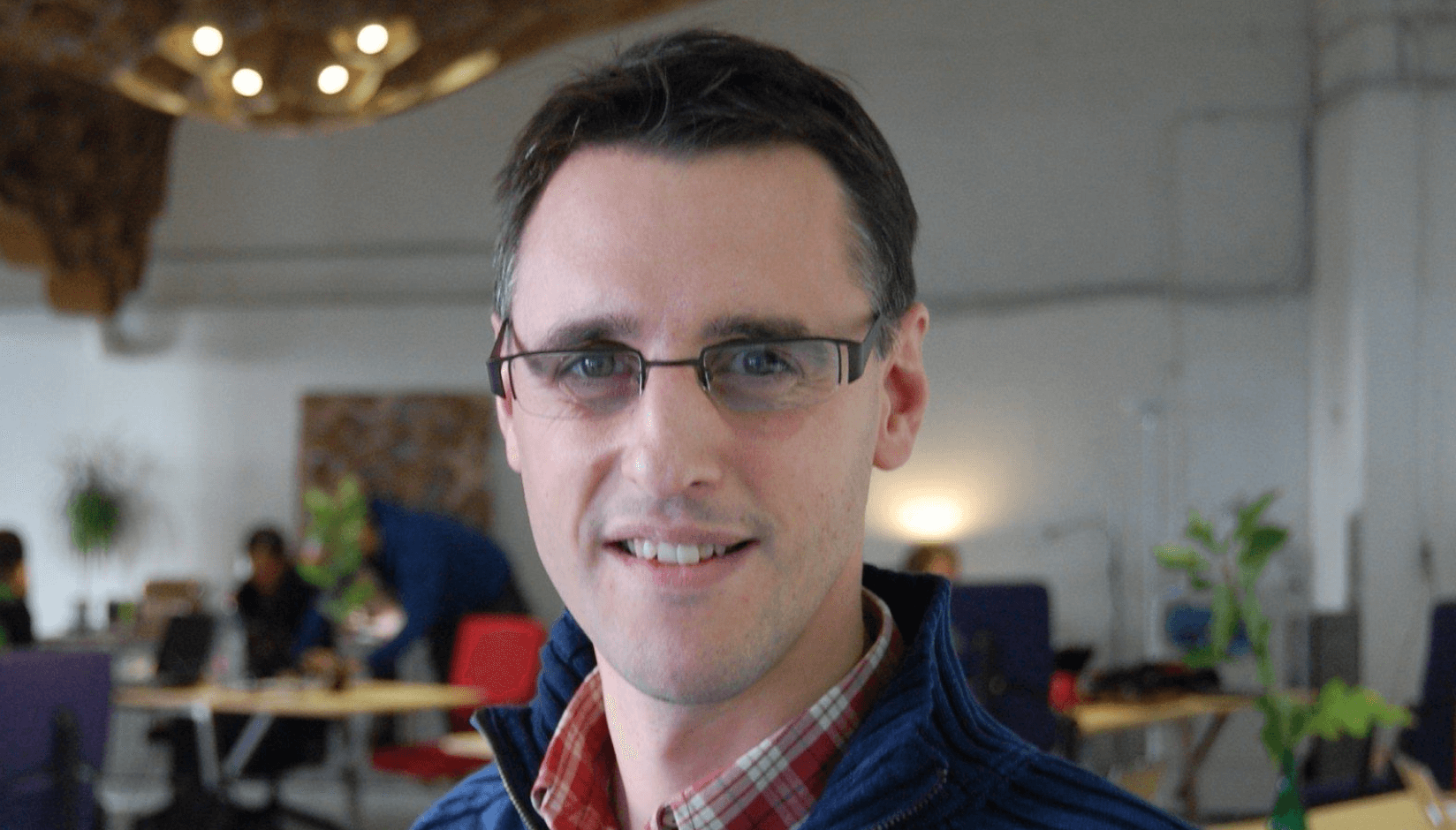
Jean-Yves Huwart, the founder of the Coworking Europe conference, has witnessed the evolution of the flexible workspace from a niche concept for "social entrepreneurs" in 2010 to a multi-billion dollar industry. His perspective is rooted not just in real estate, but in the fundamental shift toward human-centric and flexible work experiences.
In this interview, we distill Jean-Yves' core insights on the global trends shaping the coworking industry, the specific evolution of the European flexible space market, and the philosophy behind his "Social Workplace" consultancy.
1. The evolution of the European industry: maturation & diversification
Jean-Yves' journey began when "coworking wasn't in the air.” His observations highlight the dramatic evolution of the European market from a collection of earnest pioneers to a mature, highly segmented industry.
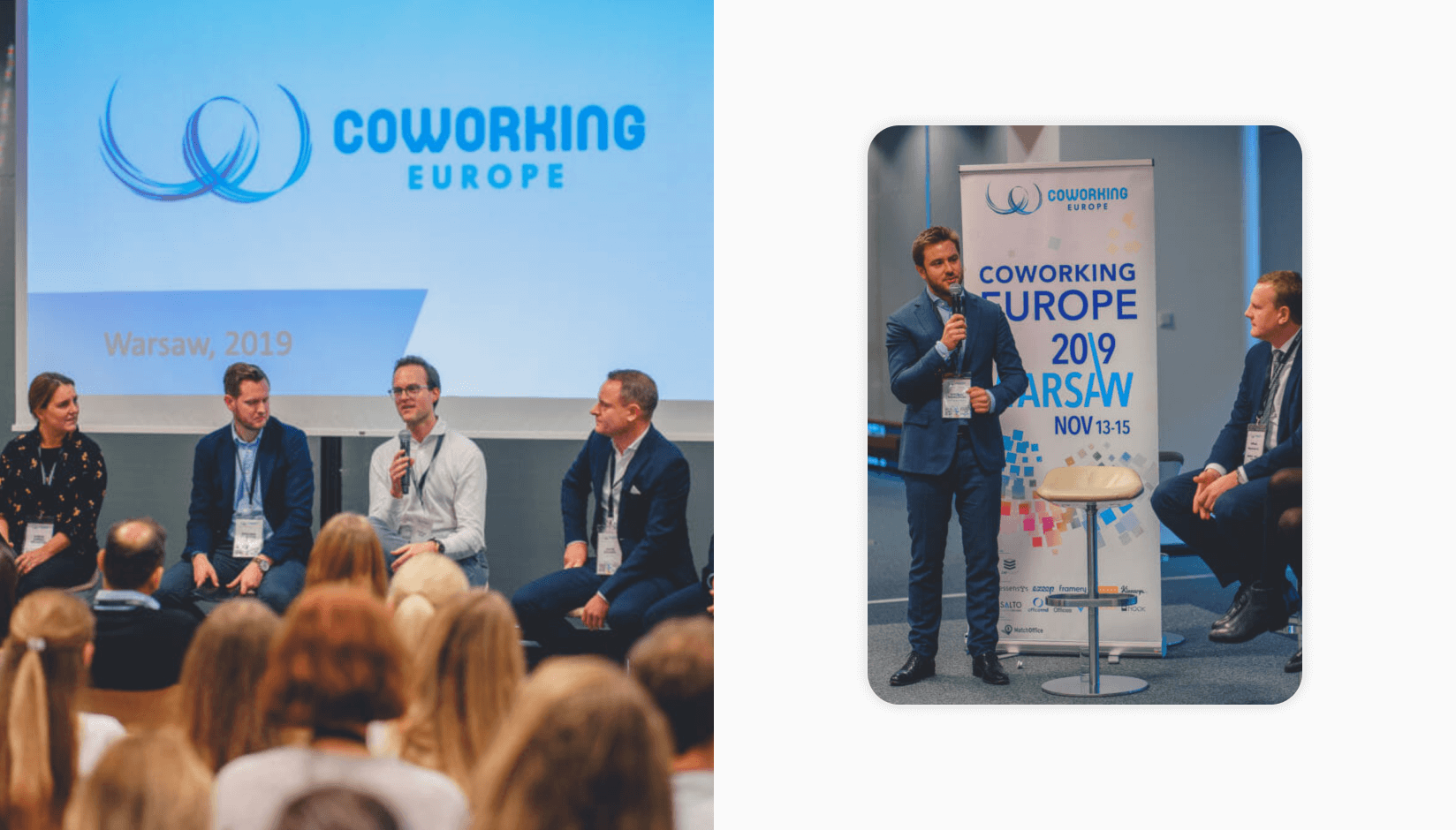
Panel discussion at the Coworking Europe 2019
From pioneers to profitability
- The early adopters: Jean-Yves recalls the first Coworking Europe conference in 2010, where the program featured only one testimonial per country. Germany and Spain were identified as the earliest adopters. This era was characterized by a focus on the ideal and social interaction, often viewed as a "side project."
- The maturation point (UK dominance): the industry truly matured when the UK, influenced by the US, experienced a boom. Jean-Yves calls the UK "by far the most mature coworking market in Europe," a fact still reflected in recent data, which shows the UK commanding a significant share of the European market.
- The shift to economics: the modern industry has learned to monetize. As Jean-Yves notes, the community is now "playing a major role in how new economies will be structured," having moved past the conceptual stage to understand the economics of private offices and diversified services.
Global trends driving the European coworking industry growth
Jean-Yves points to several key trends that are now defining the European coworking landscape:
| Jean-Yves' observation | Actionable market trend (post-2022 data) | Deep analysis |
| Asset-light development model | Recent data shows asset-light deals (managed partnerships, revenue share) dominate new expansions (e.g., 95% of IWG's openings), shifting CapEx risk to landlords. | This fulfills Jean-Yves' prediction, emphasizing that coworking operators must focus on management expertise and brand rather than property ownership. |
| Satellite office models | The corporate segment now accounts for over 50% of the market share in Europe, driving demand for satellite or 'hub-and-spoke' models that mitigate commute times and attract talent. | This is the new customer base Jean-Yves foresaw, necessitating a B2B sales approach focused on flexibility and corporate compliance (e.g., ESG standards). |
| Diversification is key | Diversification through virtual offices, event spaces, and meeting rooms is a key strategy for expanding revenue. | These are, in fact, some of the fastest-growing and most competitive segments in the market, validating Jean-Yves' advice that coworking operators must be service companies first, managing space, not just selling it. |
2. The Social Workplace philosophy & global purpose
Jean-Yves Huwart's consultancy, socialworkplaces.com, reflects his core belief that coworking is fundamentally a re-invention of the office for the digital age, prioritizing human interaction over mere production.
Coworking as a socio-economic tool
Jean-Yves realized the model he discovered in Brussels wasn't just a conventional office; it was a solution to major socio-economic problems globally.
- Solving isolation: his personal motivation was escaping the "hell" of working from home a core psychological need shared by freelancers and remote workers worldwide.
- Building infrastructure: his work in markets like Africa showed him that in developing countries, the primary role of coworking is often to "provide basic infrastructure at an affordable cost," demonstrating that the model’s value is fundamentally flexible and crucial for emerging middle classes.
The value of physical gathering
The Coworking Europe conference, and others he founded, provides strength and connection to the industry. Although the event had to be held virtually during the pandemic, Jean-Yves Huwart stressed that nothing can replace in-person meetings. Cancellations of events in 2020–2021 ensure that these gatherings are not just presentations; they are the nexus for real human connection. For an industry built on community, the conference serves as a powerful resource hub that fortifies people and relationships.
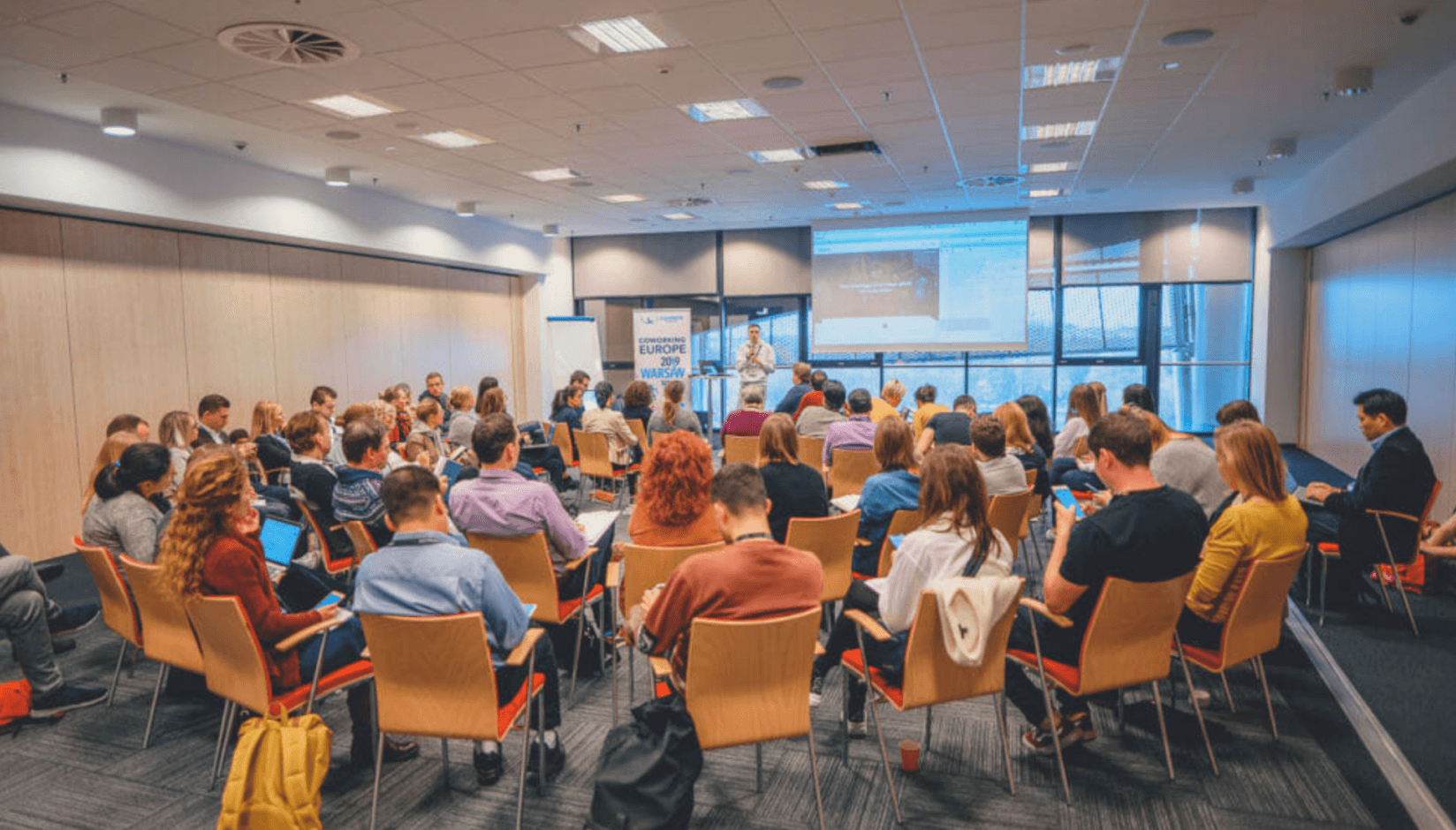
Coworking space marketing workshop carried out by Igor Dzhebyan, co-founder & CEO of Spacebring
Top coworking & flex workspace conferences 2026: the strategic operator's guide
3. Position and value delivery: Jean-Yves Huwart's mandates
Jean-Yves distills the keys to success into two powerful mandates that define the strategy for the modern coworking space owner.
- Be right on positioning and value: "Be right about the positioning, the quality and the perceived value you deliver your members with." The balance depends on the quality and strength of your community. The value delivered must always feel significantly greater than the cost.
- Don't try to be everything: "Don’t try to be everything, you can’t." This mandates niche focus and specialization. In a market now defined by IT, tech, and enterprise clients, a narrow, specialized focus on a particular demographic (e.g., design-led spaces for creatives, or high-security spaces for finance) is the most profitable strategy.
The entire coworking movement, driven by pioneers like Jean-Yves Huwart, is paving the way for a transition toward a sustainable, Workspace as a Service (WaaS) model where success is measured not by square footage, but by the quality of the connections and the value delivered to the human working within the space.

Generate recurring revenue and offer exceptional customer experience at your shared or coworking space
Jean-Yves Huwart's advise for coworking space managers
- Specialize your niche: define your target demographic (e.g., tech, creative, finance) and build your value proposition around them. Trying to appeal to everyone dilutes your brand and value.
- Prioritize value over cost: ensure the perceived value (community, personalized service, bespoke amenities) always feels significantly greater than the membership price.
- Adopt an asset-light model: focus on management expertise and brand identity (the "Service") rather than property ownership (the "asset") to scale profitably and mitigate risk.
- Shift to a service mindset: recognize that you are a service provider managing a WaaS experience, not a landlord renting space.
Do you want to know other industry experts' opinions about the trends that are going to rule 2026? Get their insight here: