


Two days a week is the request I see most often from practitioners looking for a room. Not an hour here and there, and not a full-time lease. They want one fixed day, a second day they can move when a client needs to, and the same room every week. Two days, not five.
Most workspace pricing has no natural place for that request. The hourly rate suits people who drop in when they need to. The monthly licence suits people who are in every day. A practitioner who wants ten or twelve hours a week, and wants them predictable, sits between the two and can end up paying for flexibility they do not use.
I run Rent A Therapy Room, a UK marketplace where therapists, counsellors, beauticians and wellness practitioners let and find rooms. Of the 197 rooms live on the platform at the time of writing, 39 publish an hourly figure somewhere in the listing and 23 describe availability in days per week. The rest are priced by the month or left to an enquiry. That leaves a meaningful share of demand served with two blunt instruments.
Who is the two-day tenant?
They are usually established enough to have a caseload with a rhythm, and not interested in building one that fills five days. Clinical hours are limited. Many practitioners work around a school run, an employed job or a second role, and two days is the number they have chosen on purpose.
The pattern matters more than the hours. A therapist who sees clients on Tuesdays needs Tuesday at the same times each week because clients book in sequence and hold those slots. A room that changes from week to week can break that sequence and make continuity harder to maintain.
This is a different customer from a hot-desk member. Both pay for part-time access, but one needs a location that stays still. For this tenant, continuity is part of the product.
Why hourly pricing can penalise regular part-time tenants
An hourly rate is designed for unpredictability. It has to cover turnover between bookings, access arrangements, cleaning, and the administration of a calendar that changes constantly. Someone booking the same six hours every week is not buying much of that flexibility. They are buying certainty, but may be charged as though they were buying flexibility.
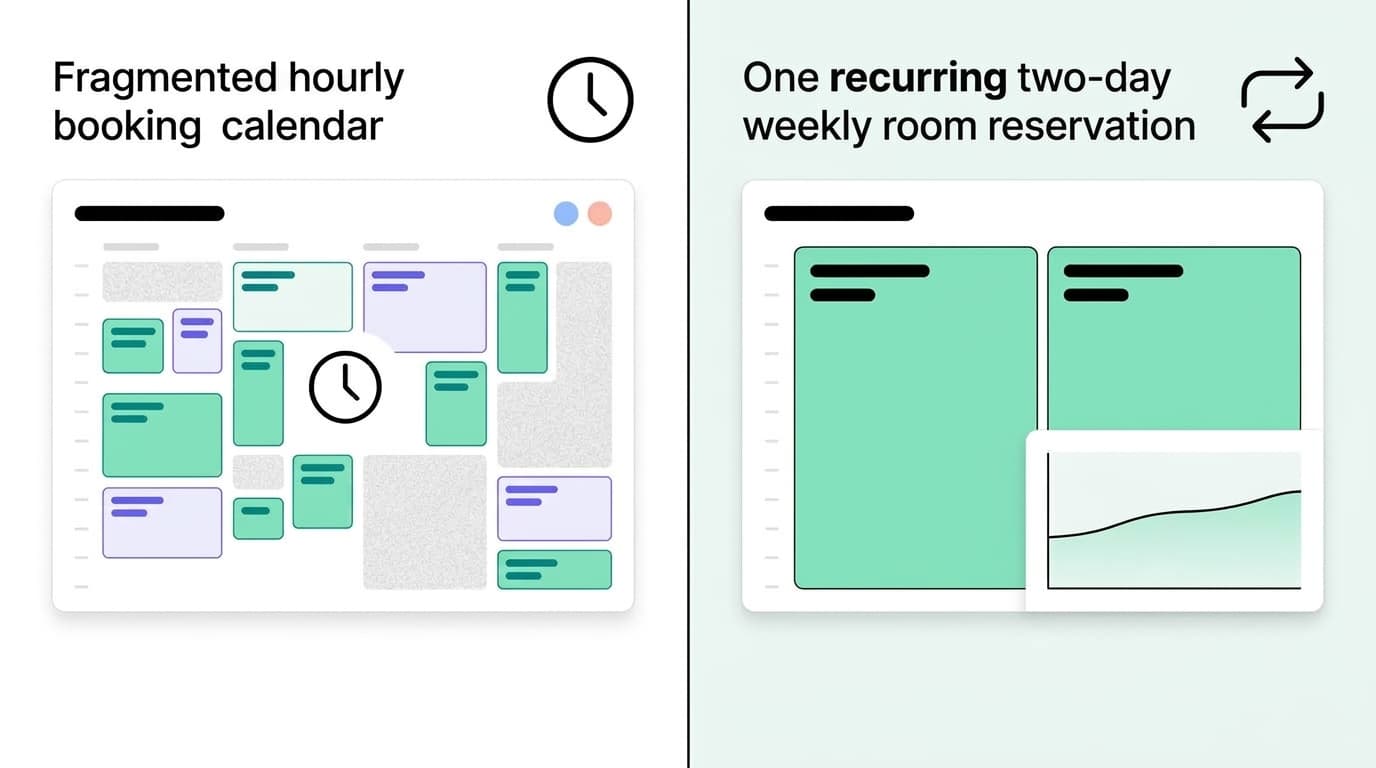
The numbers can look strange once you put them together. At £15 an hour, a tenant booking twelve hours a week pays about £780 a month (£15 × 12 hours × 52 weeks ÷ 12 months). On the same platform, many full-time rooms are listed between £200 and £500 a month. A part-time tenant paying by the hour can therefore pay more than a full-time tenant for less access, while the operator may also carry more administration.
There is a second cost that does not appear on the invoice. Hourly booking can feel insecure, so the practitioner may be less likely to leave equipment, put the address on their website, or commit to the location. A room that is not reliably theirs may be easier to replace.

Generate recurring revenue and offer exceptional customer experience at your shared or coworking space
Price the slot rather than the hour
A fixed weekly slot held for a named practitioner can turn a changing string of bookings into committed revenue. For operators, the trade-off is between the certainty of regular income and the opportunity to sell individual hours at a higher rate.
Four changes can make the offer more useful for regular part-time tenants.
1. Sell named days rather than open hours
“Tuesdays and Thursdays, daytime” is a product a practitioner can plan a caseload around. “Available hourly” may be cheaper, but it does not provide the same certainty.
2. Add a swap allowance
Two arranged moves per month can remove a common hesitation for a two-day tenant. It gives them a way to shift a day when a client needs to reschedule while preserving their regular slot. The right allowance will depend on how often that room and time are otherwise booked.
3. Bundle the part-week
One fixed day plus a flexible second day, or a fortnightly package for practitioners who alternate weeks, can be easier to understand than a discount on the hourly rate. These packages also help operators create clearer resource pricing rules for different booking patterns.
4. Price the part-week clearly against the full week
A two-day licence priced below half the full-week rate can make the value exchange clear while retaining three days of inventory for other tenants. Operators should test the discount against actual demand for each slot, rather than applying one rate to every room and time.
The details that influence retention
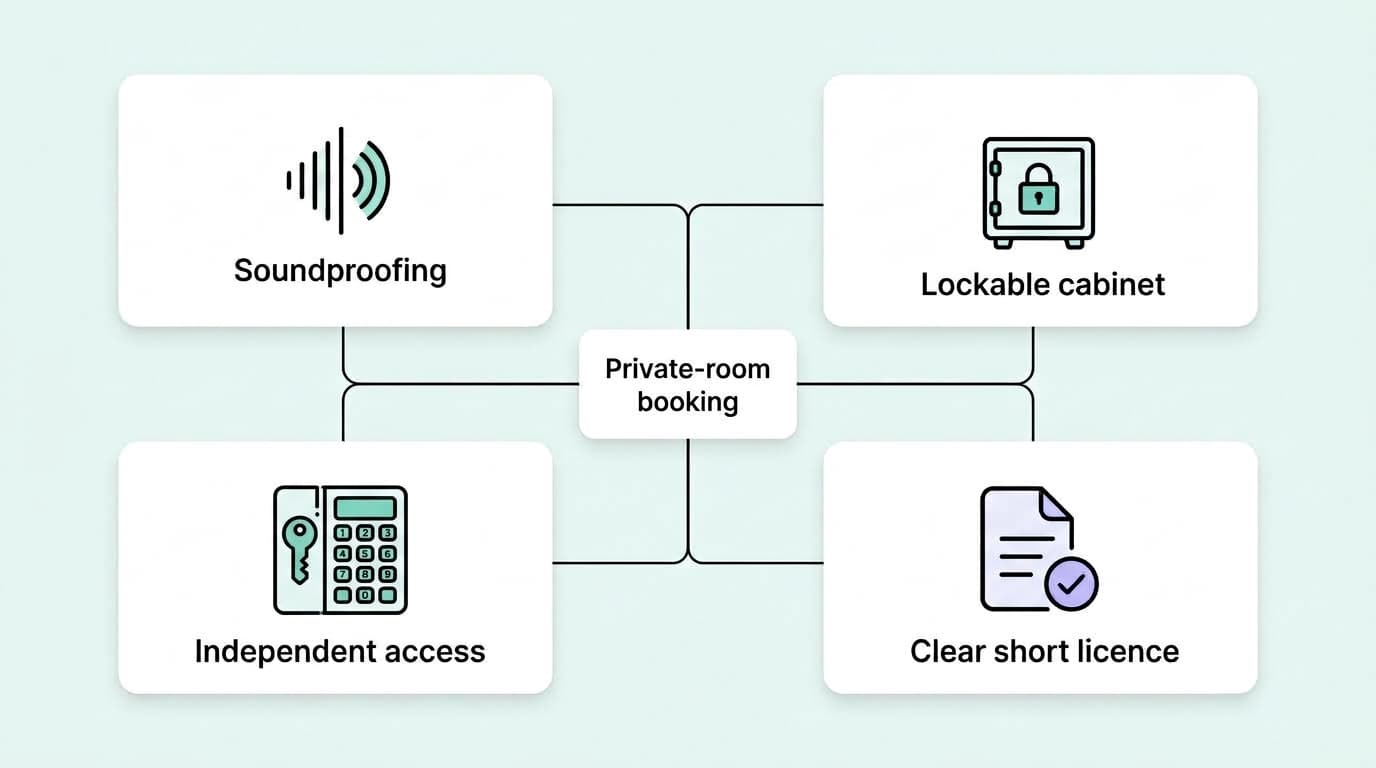
Soundproofing and location may get a room shortlisted. The following details often affect whether a part-time tenant stays.
Turnaround between rentals
A part-time tenant may book back-to-back sessions rather than one long block, so fifteen minutes between clients has to be enough in practice. If the schedule is tight and the room is not reset on time, their day can quickly become difficult.
Somewhere to leave things
A lockable cupboard or shelf can make a regular arrangement more practical. Practitioners may carry equipment, notes, and sometimes furniture, and moving it twice a week adds friction.
Independent access
Early sessions before staff arrive and evening sessions after they leave can be valuable to part-time practitioners. A keypad or lockbox may be enough to make these times accessible, subject to the building’s security requirements. Operators can also use booking and access controls to keep availability and permissions aligned.
A clear short licence
A short licence should state the named slot, notice period, cleaning arrangement, insurance requirements, and what happens if a session runs over. Clear terms reduce misunderstandings before they start. Operators managing recurring arrangements can also use subscriptions and automated invoicing to make regular payments easier to administer.
Measure the floor by slot, not just by room
Part-time letting changes how you should read utilisation. Hours per desk tells you little about a room that is only marketable on a Tuesday morning. Read the room by slot instead.
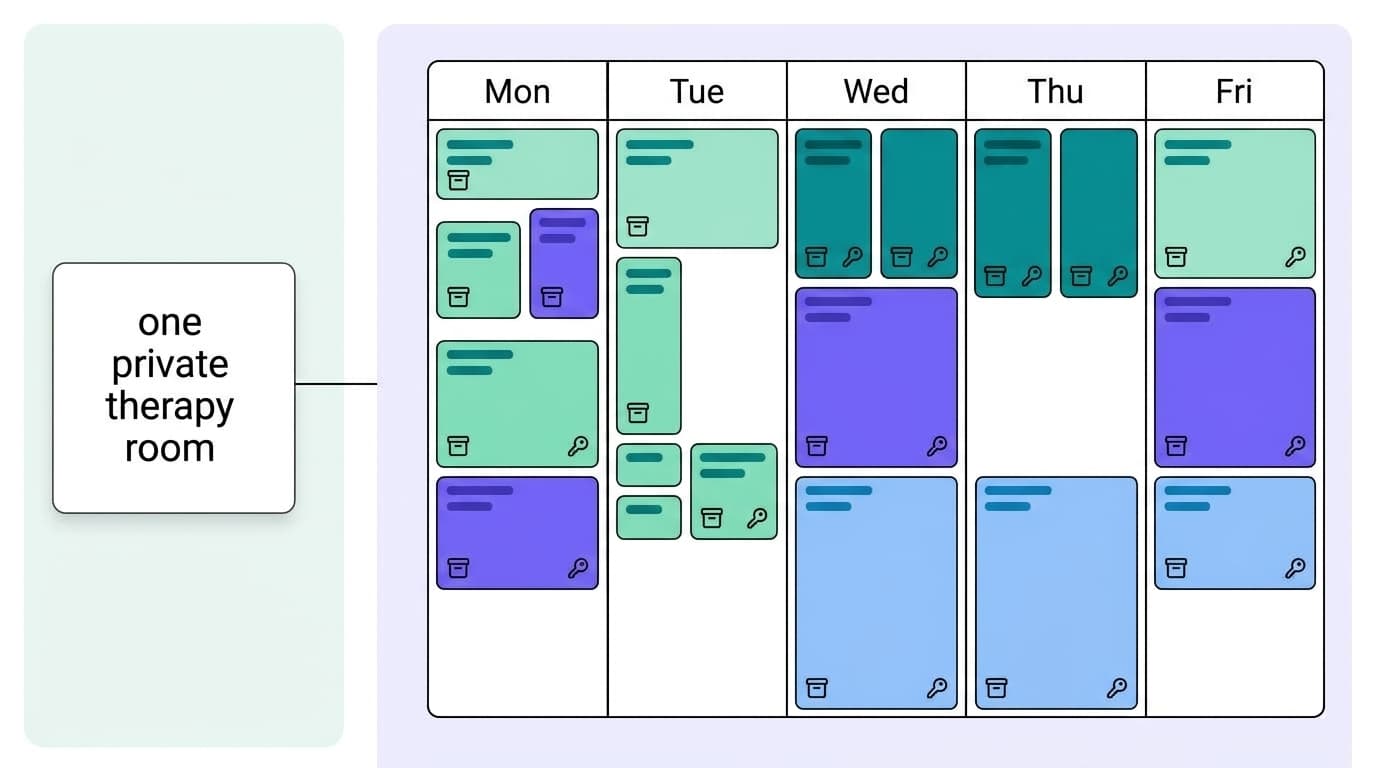
If Tuesday between 10 a.m. and noon is booked every week for a year, that slot is doing its job—even if the room is not occupied every hour of every day. Looking at booking and occupancy data can help operators identify demand patterns and test offers around them; member and usage data can reveal which times, spaces, and plans members value most.
The useful consequence is that a room does not always need to be let as one unit. Two part-time tenants with different days can cover a working week. Whether that produces more revenue than a full-week tenant will depend on local demand, administration costs, and the reliability of each booking.
A note on the data
The figures here come from a room marketplace, not from coworking buildings, so they describe what practitioners search for and what listings advertise. They do not predict what your own rooms can fill. Your calendar, local market, and operating costs should guide the final offer.
For operators already renting rooms by the hour, this guide to private hourly room rental covers another important requirement for many practitioners: confidentiality.
Frequently asked questions
1. How should I price a two-day-a-week room licence?
Price the slot, not the hour. Work out what those days are worth as inventory, offer a clear discount against a full week where the numbers support it, and commit to a fixed rate for a defined period rather than discounting the hourly rate alone.
2. Should a part-time tenant pay a deposit?
A deposit or a month in advance can be appropriate for a regular licence, particularly when a fixed slot is held for that tenant. Requirements should be set out clearly in the agreement and checked against applicable local rules.
3. What is a swap allowance?
It is a set number of arranged moves per month, allowing a tenant to shift a day without losing their regular slot. The appropriate number depends on room demand and the operator’s ability to accommodate changes.
4. Can I rent the same room to two part-time tenants?
Often, yes. Tenants using different days can share a room across the week. Keep slots, access, cleaning responsibilities, and any storage arrangements clearly separated.
5. Do part-time tenants need a different agreement from full-time ones?
They may need different terms, but not necessarily a different document. A short licence that names the slot, notice period, cleaning arrangement, and insurance position can cover a regular part-time arrangement.