


Good coworking design is not about making the space look current. It is about making the space work. Members should be able to focus, take calls, meet, and move through the day without friction. Staff should be able to run the space without constantly compensating for layout mistakes.
That matters because design affects both experience and operations. Layout influences how the space feels to members, how smoothly the day runs, and how efficiently square footage is used. JLL also notes that optimizing layout, density, and amenity balance can help reduce operating costs.
If you are opening a new location or reworking an existing one, focus on the decisions that change the experience most: room mix, acoustics, circulation, privacy, and the everyday usability of the space.
A good coworking space design balances focus, privacy, collaboration, circulation, and revenue per square foot.
What members complain about most
A useful starting point is not design theory. It is what members actually complain about.
In a small sample of Reddit complaint threads about coworking spaces, the same issues came up repeatedly. In 5 out of 5 threads, people mentioned noise, calls, or lack of privacy as a core problem. In 4 out of 5, the practical fix was some version of better zoning: phone booths, quiet rooms, clearer etiquette, or more separation between call-heavy and focus-heavy areas.
This is not market research, but it is a useful signal. Members rarely complain about aesthetics first. They complain when the space is distracting, call-heavy, or missing privacy.
In a hurry? Start here
If you only remember five things, make them these:
- Start with your business model, not your mood board.
- Build for focus, calls, meetings, and casual interaction at the same time.
- Do not overbuild open desk areas.
- Solve acoustics, privacy, circulation, and booking before cosmetic upgrades.
- Treat room mix as an operating and revenue decision, not just a design one.
Before finalizing a coworking space layout, check five basics: phone booths, meeting rooms, quiet zones, power access, and booking flow.
What those complaints mean for operators
The message behind most coworking complaints is simple: the space is not supporting how people actually work.
If members are frustrated by noise, the problem is usually not culture alone. It is that noisy and quiet functions are too close together. If calls constantly spill into open desks, the issue is not just etiquette. It is a room-mix problem. If members feel exposed or distracted, the problem is often a lack of privacy layers rather than a lack of style.
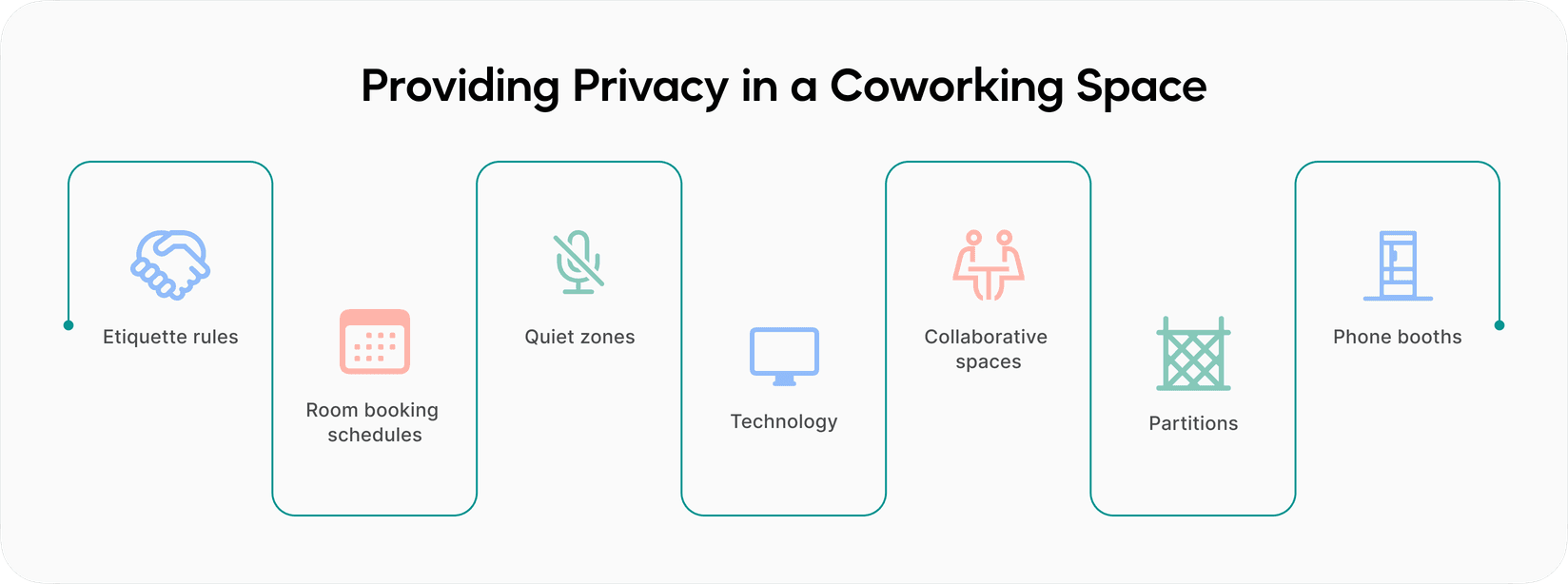
Research on office acoustics supports that. Speech and background office noise are major sources of distraction in work environments. PubMed In other words, the complaints members raise most often are not minor annoyances. They point directly to design decisions. In addition to thoughtful workspace design, noise reduction technologies can help minimize distractions and create a more comfortable environment for focused work and virtual meetings.
Start with the business model, not the furniture
Before you pick furniture, finishes, or decor, get clear on what kind of workspace you are building.
If the space is hot-desk heavy
You need:
- flexible seating
- clear quiet and social zones
- abundant power access
- easy wayfinding
- enough phone booths for short calls
In this model, convenience matters most. Members want a workspace that feels easy to use the moment they arrive.
If the space is private-office heavy
You need:
- stronger sound separation
- reliable access control
- dependable meeting room access
- a professional arrival experience
- enough shared amenities to support the community angle
Here, design has to support privacy and professionalism at the same time. A stylish lounge does not make up for poor acoustic isolation or too few meeting rooms.
If the space serves startups and small teams
You need:
- adaptable team zones
- bookable small meeting rooms
- whiteboard-friendly collaboration space
- clear growth paths from desks to offices
These members change fast. Do not overdesign for a perfect static layout. Flexibility matters more.
That kind of flexibility shows up in Perkins&Will's Houston studio, which combines focus rooms, huddle rooms, team tables, movable desks, and reservable flexible spaces instead of locking the plan into one format.
If the space targets a niche community
A space for creators, therapists, legal professionals, educators, or wellness operators should not look and function like a generic coworking floor. For coworking spaces serving legal professionals, design decisions often need to support privacy, professionalism, and local visibility. The room mix, privacy standard, and member journey all need to match the audience.
A better question than “What does a modern coworking space look like?” is “What does our ideal member need to do here every week?”
Coworking space layout: plan the right room mix
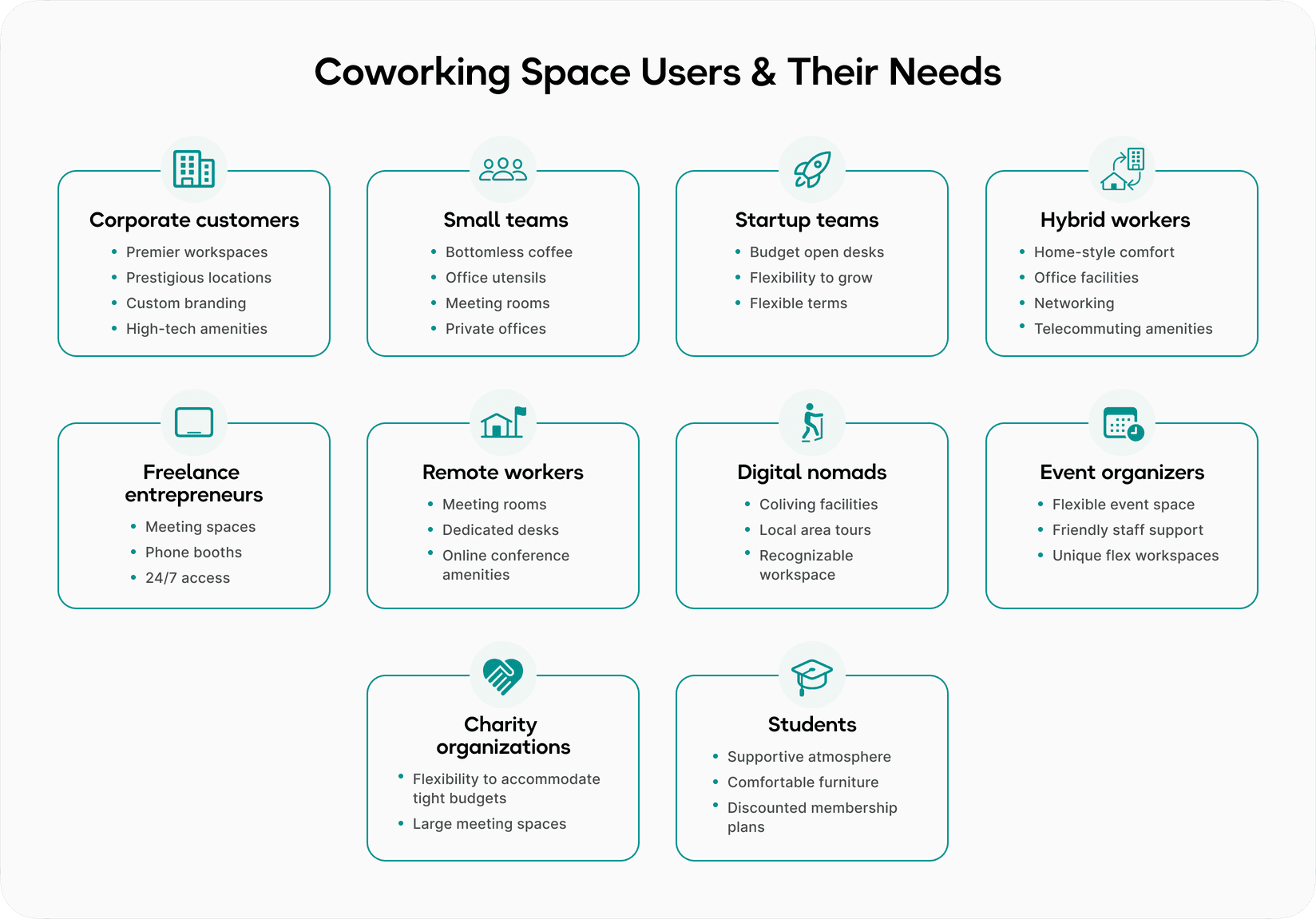
Room mix shapes both the member experience and the economics of the space.
Jerome Chang makes this point clearly in his interview with Spacebring: every part of the plan should earn its keep. He talks about avoiding oversized lobbies, making hallways useful, and thinking about revenue per square foot as a design discipline, not just a finance metric.
Open work areas
Open desks are efficient, but they are easy to overdo. They only work when backed by a real acoustic plan, good lighting, and fast access to quieter alternatives.
That point shows up in Gensler's workplace research too: focus pods, quiet zones, and noise-control measures have become standard because concentrated work needs protected space, not just more desks.
Dedicated desks
These work well for members who want consistency without paying for a private office. They are especially useful for hybrid professionals and members with monitor-heavy setups.
Private offices
Private offices often generate more revenue per member, but that does not mean they should dominate the floor plan. Add too many and the space becomes less flexible while the community feel starts to thin out.
Phone booths
Phone booths are one of the highest-value parts of the layout. They cut noise spill, protect privacy, and make open areas far more usable. If members take regular calls, booths are not optional.
Meeting rooms
Underbuilding meeting capacity is one of the most common layout mistakes. Members will forgive a smaller lounge faster than they will forgive never being able to book a room. For meeting rooms that host hybrid meetings, room planning may also need to account for integrated video conferencing, displays, microphones, audio, and simple controls. Working with providers such as Briggs Solutions conference AV solutions can help address these needs.
If you offer room booking, design should account for visibility, turnover time, and ease of scheduling.
Event and community space
This only makes sense if events are part of the business model. A large event area that sits empty most weekdays is expensive dead space. In many cases, a smaller convertible area works better.
Kitchen and lounge areas
These spaces create energy and informal interaction, but placement matters. In a compact lounge, a loveseat sofa can provide a
comfortable two-person conversation area without taking up as much floor space as a larger seating configuration.
Specialty rooms
Podcast rooms, photo studios, nap rooms, wellness rooms, or content labs can be a real differentiator, but only when they match actual demand. They should support the business model, not distract from it.
How to design a coworking space layout for focus and flow
Once the room mix is clear, the next step is arranging it well.
1. Separate noisy and quiet functions
Do not place phone booths, kitchens, and event zones right next to quiet desk areas. It sounds obvious, but this mistake shows up constantly.
Jerome Chang argues that coworking has to compete with the home office by offering both social energy and real focus space. He also warns against overusing glass because it can create a fishbowl effect instead of privacy.
2. Create privacy in layers
Privacy does not have to mean walls everywhere. In many spaces, it works better as a gradient:
- social zones near the entry or shared amenities
- collaborative areas in the middle
- quiet desks deeper in the layout
- enclosed rooms and booths for the highest privacy needs
That makes the space easier to understand and easier to use. Privacy should also extend to shared facilities such as restrooms, where durable partition solutions from providers like One Point Partitions can help create clearly separated, functional spaces.
3. Plan circulation early
People should be able to move through the space without constantly crossing focused work areas. Bad circulation creates disruption, noise, and bottlenecks even when the floor plan looks generous on paper.
You can see the same logic in Perkins&Will's Durham studio, where storage and circulation were concentrated around the central core to keep the main floor open, daylit, and easier to work in.
Jerome Chang makes a related point in more practical terms: instead of treating corridors as wasted space, he looks for ways to turn them into useful nooks, small work areas, or moments of interaction.
4. Design adjacencies intentionally
Think carefully about what belongs next to what.
Good examples:
- phone booths near open desk areas
- meeting rooms near team zones
- café or lounge space near reception or social zones
- printers, lockers, and utility functions away from the main productivity paths
5. Make flexibility operational, not decorative
Movable furniture is not enough on its own. What matters is whether the space can support different work modes across the day.
Jerome Chang describes this as a blank-canvas approach: rooms that can do more than one job, furniture that can be rearranged quickly, and a layout that can evolve without a costly redesign.
Best coworking amenities that improve daily use
Not every amenity deserves floor space or budget.
The most useful amenities usually support one of three things:
- better productivity
- smoother operations
- stronger retention
That usually means prioritizing:
- excellent Wi-Fi
- abundant power
- bookable meeting rooms
- clear room availability
- access control
- lockers or storage where relevant
- comfortable kitchen or café support
- printing only if your audience still needs it
If you manage shared desks, private rooms, or flexible access, a desk booking system can shape design decisions because it changes how people use neighborhood seating, peak demand areas, and overflow zones.
The common mistake here is confusing novelty with value. Most members would rather have the basics done well than one flashy feature done badly.

Generate recurring revenue and offer exceptional customer experience at your shared or coworking space
Design choices that improve member retention
Retention rarely comes from one dramatic feature. More often, it comes from small decisions that make the space easier to use every day.
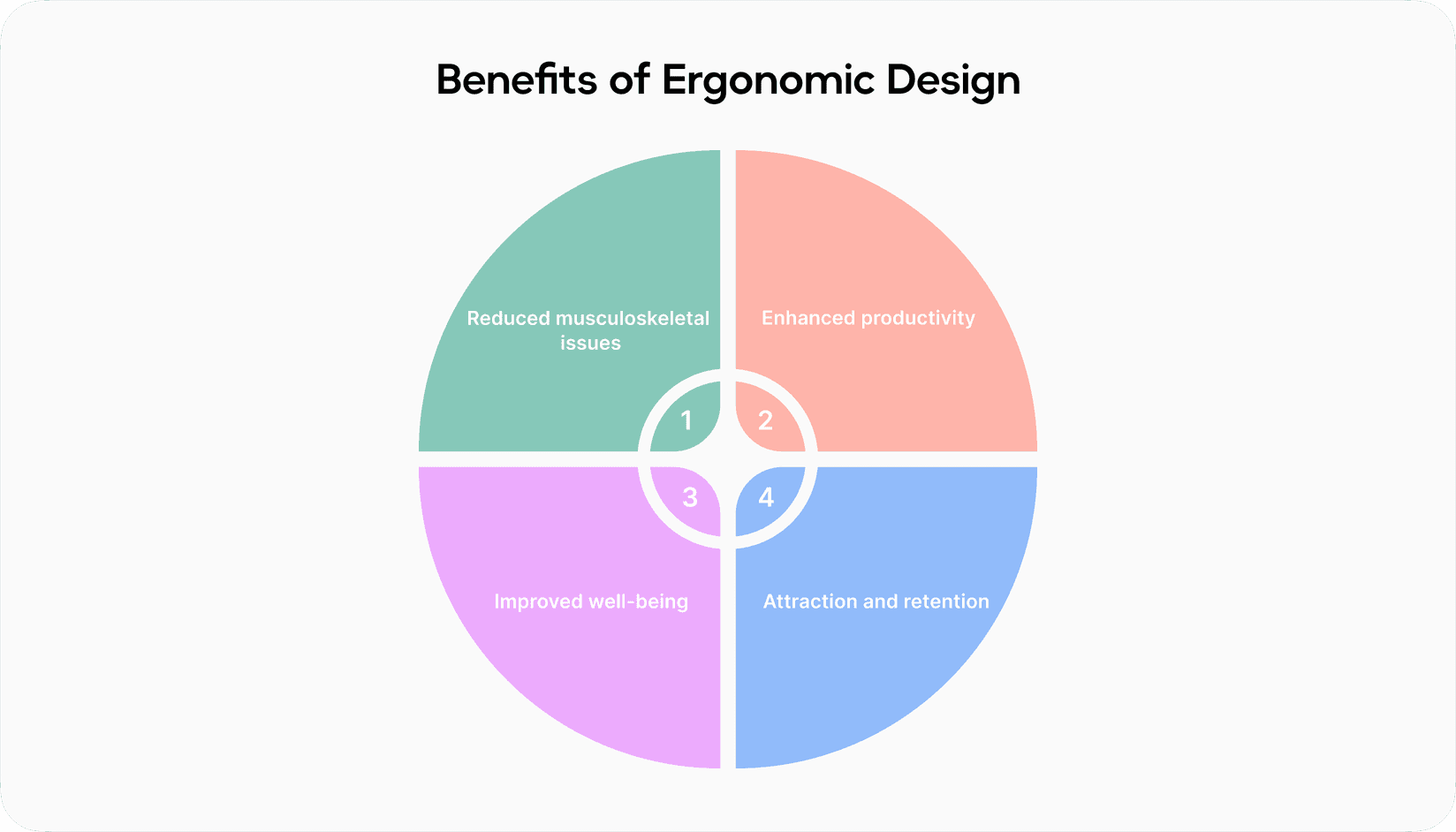
Comfort
Ergonomic seating, stable desks, good lighting, and decent thermal comfort are not extras. They are the baseline. Beyond fixtures and bulbs, a coworking lighting plan should blend task lighting, glare control, and tunable white settings so focus areas, phone booths, and lounges remain comfortable throughout the day. For larger office fit-outs or lighting upgrades, working with a partner experienced in commercial lighting installation can also help ensure consistent performance and energy efficiency.
Acoustic control
Members will forgive a less fashionable finish before they forgive constant distraction. If the space looks great in photos but sounds chaotic in real life, people notice fast. During planning, teams can preview different visual directions with an AI picture maker before committing to finishes and furniture.
Ease of booking
The easier it is to find and reserve a room, the more useful the whole space feels. A meeting room booking system and visible availability can improve both utilization and member experience.
Ease of access
Smooth entry matters more than many operators expect, especially for hybrid members who only come in a few days a week. Mobile access control can reduce front-desk friction and make the experience feel more dependable.
Reliable support services
For some members, operational details are part of the value proposition. Mail and package handling, for example, can matter a lot for small businesses and independent operators. Member support and mailroom management should be part of the conversation when the space is meant for business use, not just desk use.
Local identity matters more than generic polish
Jerome Chang also makes a useful branding point: local character matters. He argues for local artists, local coffee, and details that connect the space to the neighborhood instead of making it feel like a generic office product.
To present your coworking space concept clearly to prospective members or partners, it also helps to use professional brochure templates that showcase your amenities, pricing, and brand identity in a visually consistent way. To present your concept clearly to prospective members or partners, an AI brochure creator can also help package your amenities, pricing, and brand identity in a more polished format.
If you’re still shaping how the space should be perceived in the market, a practical brand identity guide can help clarify your positioning, voice, and visual direction before you invest too heavily in signage, interiors, and launch materials.
That matters because people do not compare coworking spaces only to other offices. They compare them to cafés, hospitality spaces, and the experience of working from home. A strong sense of place can support pricing and make the space more memorable, but it only works when the fundamentals are already solid.
When presenting your coworking space concept to prospective members or partners, an Infographic Generator can also help turn your layout, amenities, and design ideas into a clearer visual format.
Common coworking space design mistakes to avoid
Building too much open space
Open areas look efficient, but without privacy options they become noisy, stressful, and less useful over time.
Underbuilding meeting capacity
If members cannot reliably take calls or host meetings, the value of the whole workspace drops.
Designing for photos instead of operations
A photogenic lounge does not fix poor wayfinding, bad circulation, weak acoustics, or slow booking workflows.
Ignoring power and connectivity planning
Members notice dead zones, awkward charger access, and unstable connectivity immediately.
Overcomplicating the room mix
Every room type adds cost and operational complexity. If a room does not support clear demand, positioning, or revenue logic, question it.
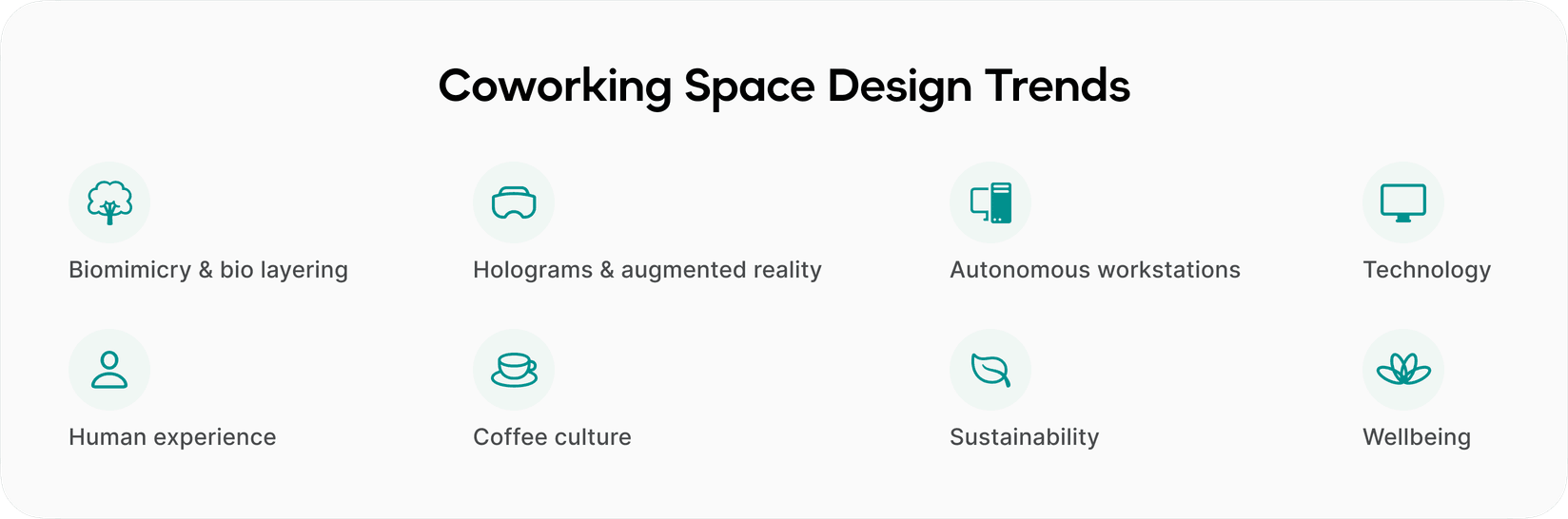
Treating trends as strategy
Trends can inspire updates, but they should not replace audience research, utilization data, or operational logic.
FAQ
What makes a good coworking space design?
A good coworking space design helps members focus, collaborate, and move through the space without friction. It balances open and private areas, supports daily operations, and fits the needs of the people using it.
How should I divide a coworking space?
Start by separating social, collaborative, and quiet functions. Then add enclosed spaces for calls, meetings, and privacy. The exact mix should come from your business model and member behavior, not from generic coworking trends.
What rooms are essential in a coworking space?
Most operators should start with open work areas, meeting rooms, phone booths, a lounge or kitchen zone, and some form of private workspace. Specialty rooms should come later, and only if demand is clear.
What is the biggest coworking design mistake?
Building an attractive open layout without enough privacy, acoustic control, or meeting capacity.
How can coworking design improve retention?
By reducing daily friction. In practice, that usually comes down to comfort, acoustics, access, room availability, good circulation, and amenities people actually use.
Final takeaway
The best coworking spaces are not the ones with the most features. They are the ones where layout, room mix, operations, and member experience work together.
If the goal is better retention, stronger word of mouth, and more efficient use of the space, start with how members actually work. Then design around those patterns with discipline.
That approach will hold up much better than chasing design trends alone.