

If you operate a coworking or flexible office space, whether that’s hot desks, private offices, or shared team suites, you already know churn is painful. When members leave, it’s not just a lost desk; it’s lost momentum, lost community energy, and more pressure on your sales pipeline.
Over 200 operators highlight member retention (53%) and overwhelming manual admin tasks (58% spend time daily/weekly) as their biggest pain points.
This article skips the theory and gets straight to execution. The focus here is how to increase engagement in ways that materially reduce churn and help you build a more stable, resilient membership base.
What engagement looks like in practice
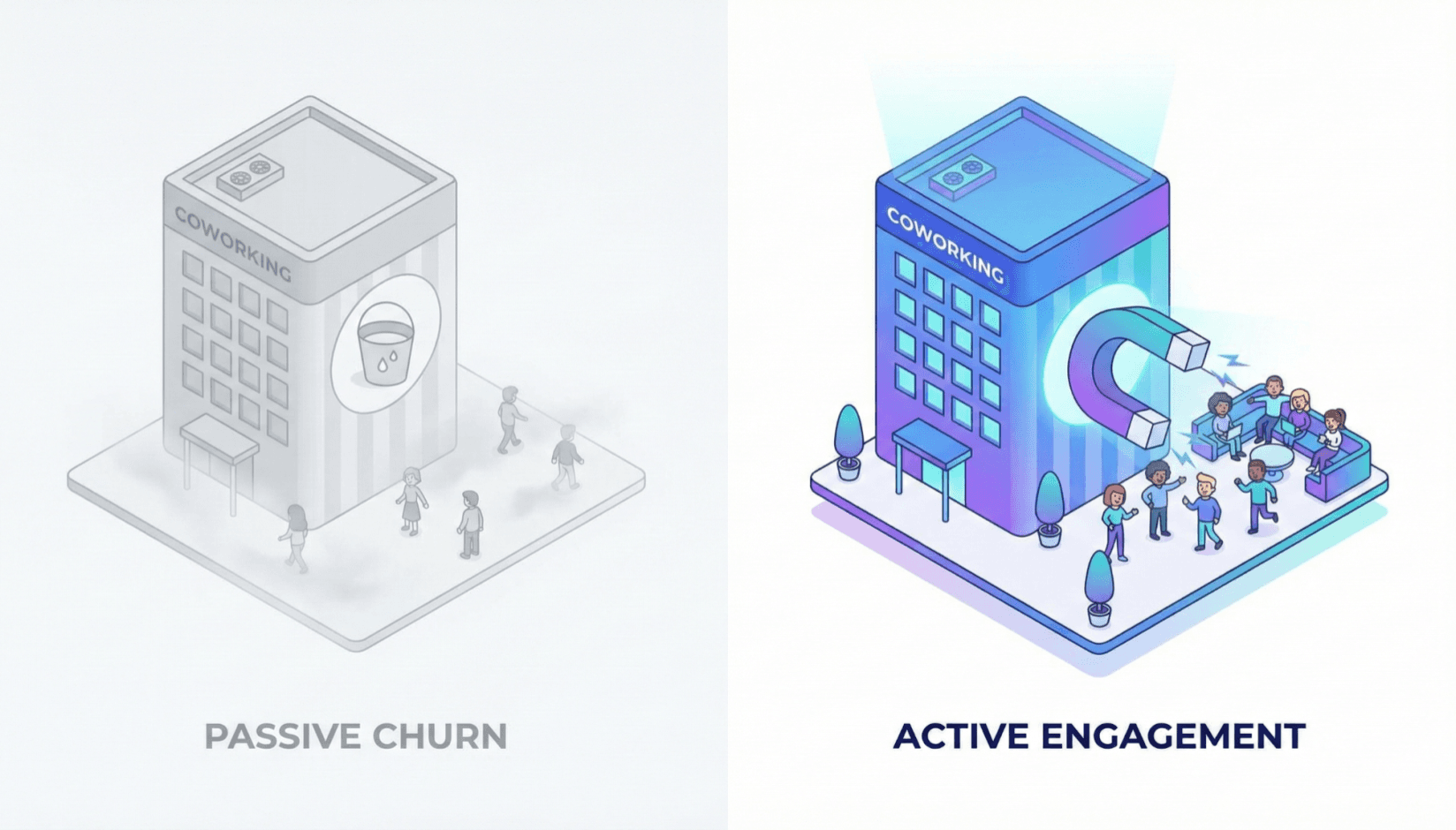
In an operational context, engagement is visible behaviour. Engaged members show up, interact, participate, and integrate your space into their working routine. Disengaged members fade quietly, fewer visits, fewer bookings, no event attendance, until one day they cancel.
From coworking operator’s perspective, engagement means:
- Members actively use the space and its amenities
- Members interact with others, not just sit silently
- Members perceive ongoing value beyond “desk and Wi-Fi”
- Members renew, upgrade, refer, or bring colleagues
Your job is to design systems that pull members into habits, not hope they magically feel connected.
Key drivers to focus on for reducing churn
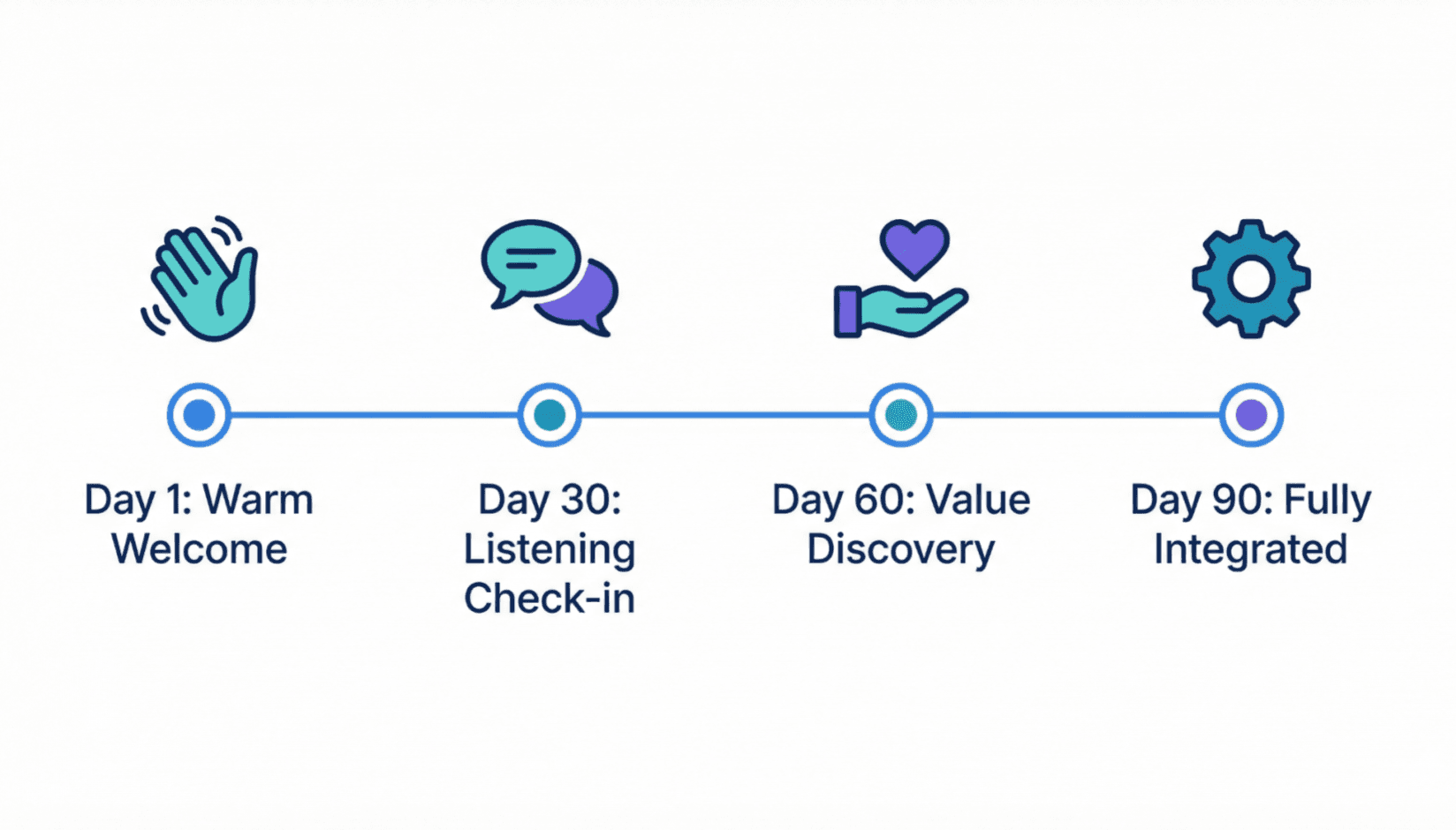
1. Onboarding: engineer the first 90 days
The highest churn risk sits in the first 30–90 days. If a new member doesn’t form habits early, they’re unlikely to stay.
What to implement immediately:
- A structured onboarding ritual (not just a tour)
Every new member should experience a repeatable onboarding flow. This includes a personal welcome, a guided walkthrough of the space, and a clear explanation of how to actually use the workspace, meeting rooms, phone booths, community tools, events, and support channels. The goal is to remove friction and uncertainty.
- Human connection from day one
Introduce new members to at least two other people on their first day. This could be a community manager making introductions or pairing them with a “member buddy.” Even a single familiar face increases return visits.
- 30-day check-in
Schedule a casual check-in after the first month. Ask what they’ve used, what they haven’t, and what feels unclear. This is not a renewal pitch, it’s a listening exercise. Capture patterns and act on them.
- Early exposure to multiple touchpoints
Encourage new members to book a meeting room, attend an event, or join the digital community in their first month. The more features they use early, the harder it is to leave later.
First impressions matter: onboarding that WOWs
2. Community: design it, don’t leave it to chance
Community doesn’t happen automatically. If your space behaves like a commodity desk provider, members will treat it as one.
What works operationally:
- Value-led events, not filler events
Move beyond generic “Friday drinks only.” Run member-led talks, skill-sharing sessions, founder breakfasts, or problem-solving roundtables. Events should help members learn, connect, or grow, not just socialise.
- Intentional introductions
Use what you know about your members. If two businesses operate in adjacent industries or could benefit from each other, introduce them deliberately. This turns your role from landlord to connector.
- Digital community as a support layer
Use Slack, Teams, WhatsApp or feed inside your member’s app to keep members connected even when they’re not onsite. Channels for recommendations, collaboration, announcements, and wins help maintain engagement between visits.
- Public recognition of member wins
Celebrate launches, hires, funding rounds, or milestones via newsletters, signage, or internal channels. This reinforces that your space notices and values its members.
100 coworking event ideas
3. Usage & habits: watch behaviour, not just payments
Engagement shows up in usage patterns long before a cancellation email arrives.
How to operationalise this:
Track signals such as desk check-ins, meeting room bookings, event attendance, and visit frequency. A noticeable drop is often an early warning sign.
When usage declines, reach out early. A simple message “We haven’t seen you much lately, anything we can help with?” opens the door to honest feedback without sounding sales-driven.
Segment your members. Hot-desk users, private office tenants, and teams behave differently. Engagement strategies must reflect those differences rather than applying one blanket approach.
4. Environment & value: make the space worth leaving home for
Members compare your space daily against alternatives: home, cafes, or cheaper providers. Engagement increases when your environment clearly wins that comparison.
Operator-level actions:
- Review which areas are consistently used and which aren’t. Underused zones are signals to reconfigure, more quiet zones, more phone booths, better meeting rooms, or improved café offerings.
- Act on member feedback quickly. Even small changes (adding a whiteboard, improving lighting, adjusting noise levels) show responsiveness and build trust.
- Align pricing with perceived value. For teams in private shared offices, make upgrade paths clear and simple as headcount grows. Flexibility here directly reduces churn.
- Frame your space as an experience, not infrastructure. The more your messaging focuses on outcomes, focus, connection, growth, the harder it is for members to replace you.
The ultimate guide to designing and utilizing an effective coworking space layout
5. Data & predictive retention: intervene before exit
Retention improves when you stop reacting to churn and start predicting it.
What to put in place:
- Create a simple dashboard tracking utilisation, engagement touchpoints, length of membership, and renewal outcomes. You don’t need perfection, consistency matters more.
- Set triggers. For example, if a member’s usage drops by a defined percentage over several weeks, flag it for outreach.
- Use feedback loops deliberately. Short pulse surveys, periodic NPS, and structured exit interviews provide insight into what actually drives departures.
- Review this data regularly and act. Retention is operational discipline, not a quarterly discussion.
6. Special focus: private shared offices & team clients
Team-based clients behave differently from solo members. They often stay longer, but when they leave, the impact is bigger.
Engagement tactics for teams:
- Onboard the entire team, not just the decision-maker. Introduce them to other teams, host a welcome lunch, and schedule a dedicated check-in with a community manager.
- Encourage cross-team interaction. Run mixers designed for teams, not just freelancers. Shared lunches, demo days, or problem-solving sessions work well.
- Offer flexibility around growth and contraction. Teams change. If your space allows easy upsizing or downsizing, they’re far more likely to stay.
- Position your space as part of their growth engine. Mentorship sessions, business events, and introductions increase perceived value beyond square metres.
- Track team engagement through desk occupancy, meeting room usage, event participation, and feedback. Declining usage across a team is a clear risk signal.
A practical action plan
- Start by auditing your current state: churn by member type, average tenure, and usage patterns. Identify where disengagement begins.
- Map the member journey for each product type, such as hot desk, private office, team space and define engagement touchpoints at each stage.
- Design repeatable systems: onboarding rituals, event calendars, digital community tools, and usage-based outreach triggers.
- Measure consistently, review often, and adjust quickly. Retention is built through small, sustained actions, not one-off initiatives.
Final thoughts
Reducing coworking churn isn’t about clever discounts or last-minute save offers. It’s about designing engagement into every stage of the member experience, from day one onboarding to ongoing community, usage monitoring, and value delivery.
For operators managing private shared offices or flexible team spaces, retention is a strategic lever. When engagement is intentional, churn slows, referrals increase, and your space becomes harder to replace. Retention isn’t a department. It’s an operating mindset.