


If you ask ten people what a coworking space is, you’ll usually get the same tired answer: “It’s a shared office.”
That answer is not wrong. It’s just too small.
A coworking space is a flexible workspace business. It gives freelancers, startups, remote teams, and companies access to desks, private offices, meeting rooms, and amenities without the cost and rigidity of a traditional lease.
But the real product is bigger than space. It’s convenience, flexibility, community. And, when it’s done well, it’s a smoother way to work.
At Spacebring, we’d put it like this:
A coworking space is a business that sells flexible access to workspace, services, and community.
That’s the simple version. The useful version is this:
Coworking is not really about desks. Desks are the container. The actual business is helping people do great work without making them build an office from scratch.
That’s why some spaces feel alive and full, while others feel like a sad room with nice chairs.
The short answer
Here’s the plain-English definition:
- Coworking means people from different companies or professions working in the same shared workspace.
- A coworking space is the business that makes that possible through memberships, day passes, private offices, meeting rooms, and shared services.
If you’re an operator, this distinction matters. You’re not simply renting square footage. You’re creating an experience people pay for again next month.
And next month is the whole game.
Why coworking exists in the first place
Coworking did not become popular because the world suddenly fell in love with exposed brick and good coffee.
It grew because traditional office models leave a lot of people stranded.
Freelancers want structure without isolation. Small teams want professionalism without a five-year lease. Remote employees want somewhere better than the kitchen table. Larger companies want flexibility without committing too early.
That basic need is why coworking took off, and why the category keeps evolving.
The first widely recognized coworking space is usually traced to Brad Neuberg in San Francisco in 2005, and the model has kept expanding since then.
Today, flexible workspace is no longer a niche idea. Large real estate firms now treat it as a serious part of the office market, with enterprise demand rising because companies want faster occupancy, shorter commitments, and more room to adapt.
For entrepreneurs considering acquiring a business, an established coworking space can also be attractive because of its recurring revenue potential and existing member base, and proven ability to improve online reputation within the local market.
That’s the big shift future operators should understand: coworking is no longer “alternative office space.” In many markets, it’s becoming the smarter default for a meaningful slice of demand.
What people are really buying
A member may say they’re paying for a desk.
They’re not.
They’re paying for one or more of these:
- a place that helps them focus
- a place that makes them look professional
- a place where work feels less lonely
- a place they can start using immediately
- a place that grows with them
That’s why the best coworking spaces are not built around furniture lists. They are built around use cases.
- A freelancer wants momentum.
- A startup wants flexibility.
- A remote worker wants routine.
- A team wants coordination.
- An enterprise client wants reliability.
If you understand that, your marketing gets better. Your layout gets better. Your pricing gets better. Your retention gets better.
If you miss that, you end up selling “workspace solutions” to nobody in particular.
Striving for your coworking space to become a recognized brand?
So what makes a space actually feel like coworking?
This is where a lot of articles get vague. Let’s make it practical.
A real coworking space usually combines four things.
1. Flexibility
This is the obvious one.
Members can choose how they use the space:
- hot desk
- dedicated desk
- private office
- day pass
- meeting room
- virtual office
They can start small. They can upgrade. They can change plans without the pain of a traditional lease.
This flexibility is one of the main reasons coworking remains attractive to both individuals and companies.
2. Convenience
A traditional office asks people to solve twenty little problems before work even starts.
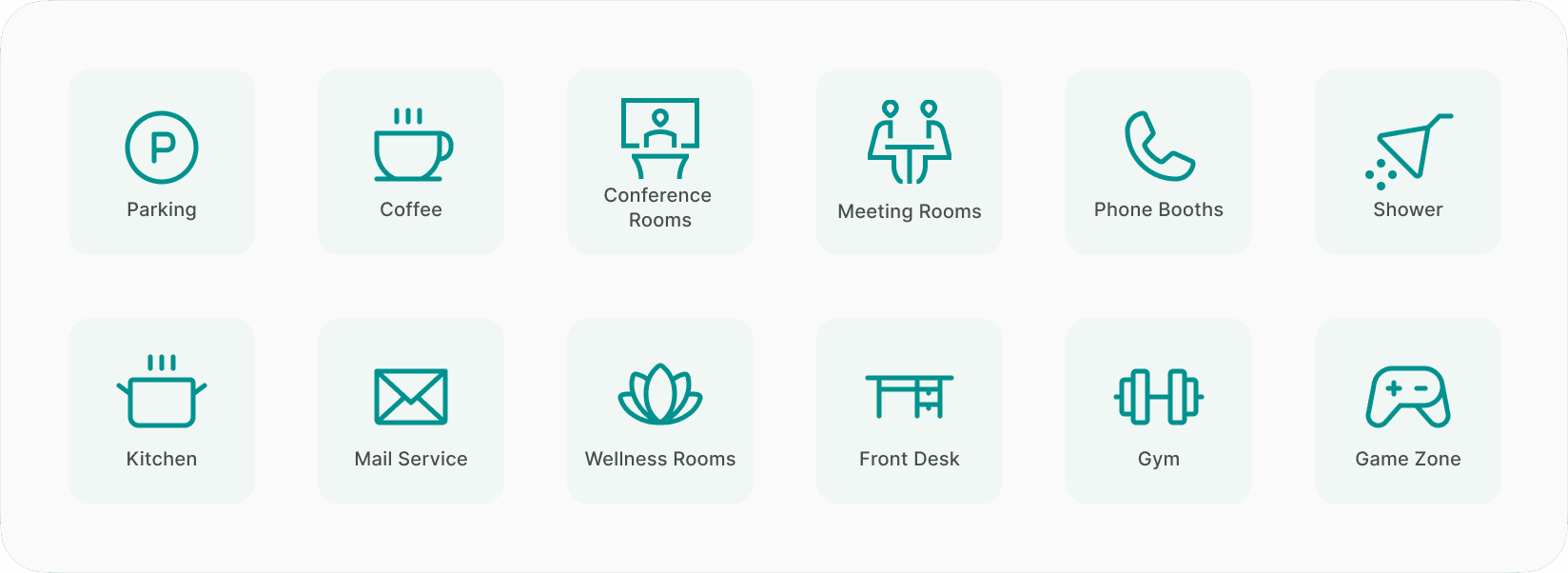
Internet. Furniture. Utilities. Cleaning. Access. Booking. Deliveries. Guests. Maintenance.
Coworking compresses all of that into a ready-to-use product.
That convenience is not a side benefit. It’s part of the value proposition.
3. Community
This is the part people talk about a lot, and often describe badly.
Community does not mean forced networking and mediocre pizza nights.
It means members feel that they are in a place where useful things happen. They meet people. They hear opportunities. They feel energy. They are not working alone in a vacuum.
In strong spaces, community becomes a retention engine. Members stay for practical reasons, then keep staying for emotional ones.
4. Operations
This is the least glamorous part, and the one that quietly decides whether the business works.
A coworking space only feels effortless to members when the systems underneath it are solid:
- billing
- room booking
- access control
- communication
- onboarding
- renewals
- reporting
Members experience this as “this place is easy.” Operators experience it as margin, retention, and fewer headaches.

Generate recurring revenue and offer exceptional customer experience at your shared or coworking space
The difference between coworking and a shared office
People use these terms like they mean exactly the same thing.
They don’t.
- A shared office is usually a physical arrangement. Multiple people or businesses use the same office environment.
- A coworking space is usually a more complete business model. It combines workspace with flexible terms, hospitality, services, events, and a stronger sense of member experience.
So yes, coworking is a shared workspace. But the best coworking spaces do more than share square meters. They package work into a product.
That’s a much more useful way to think about it if you plan to run one.
Who coworking is for
The short answer is: more people than most operators first assume.
The main audiences usually include:
- freelancers and solo professionals
- consultants and agencies
- startups and small teams
- remote employees
- distributed companies
- corporate project teams
- local professionals who need a better workplace than home
But here’s the more important point:
Not every coworking space should serve all of them.
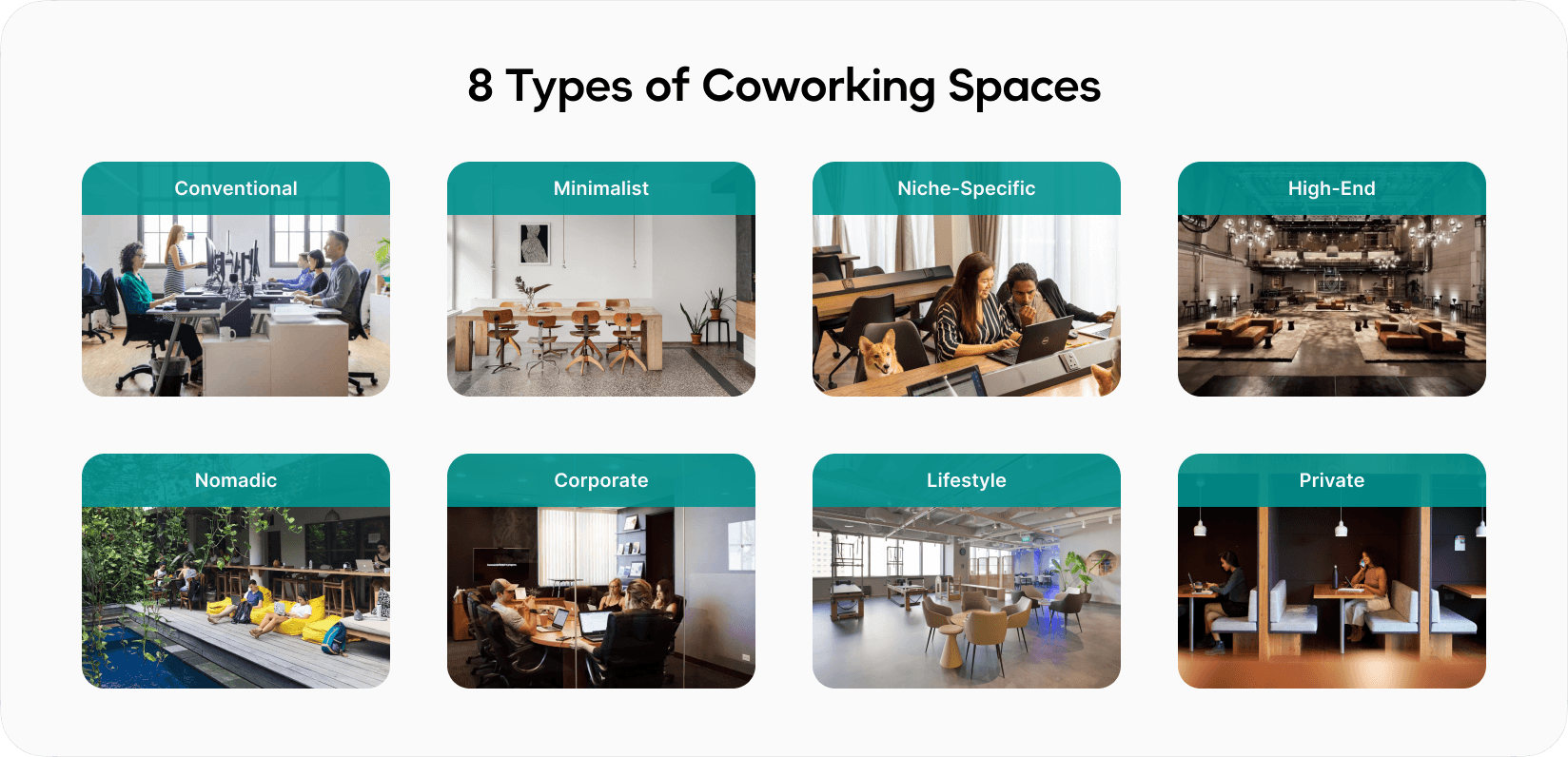
This is one of the biggest mistakes new operators make. They say, “Our space is for everyone.”
It sounds inclusive. It also sounds generic.
The strongest spaces usually make a more specific promise:
- quiet and productive for deep work
- polished and professional for small teams
- local and community-led for independents
- premium and private for business clients
- niche-focused for a defined audience
Broad appeal feels safe. Clear positioning performs better.
How coworking spaces actually make money
If you’re reading this as an operator, this part matters.
Coworking is not one product. It’s a stack of products.
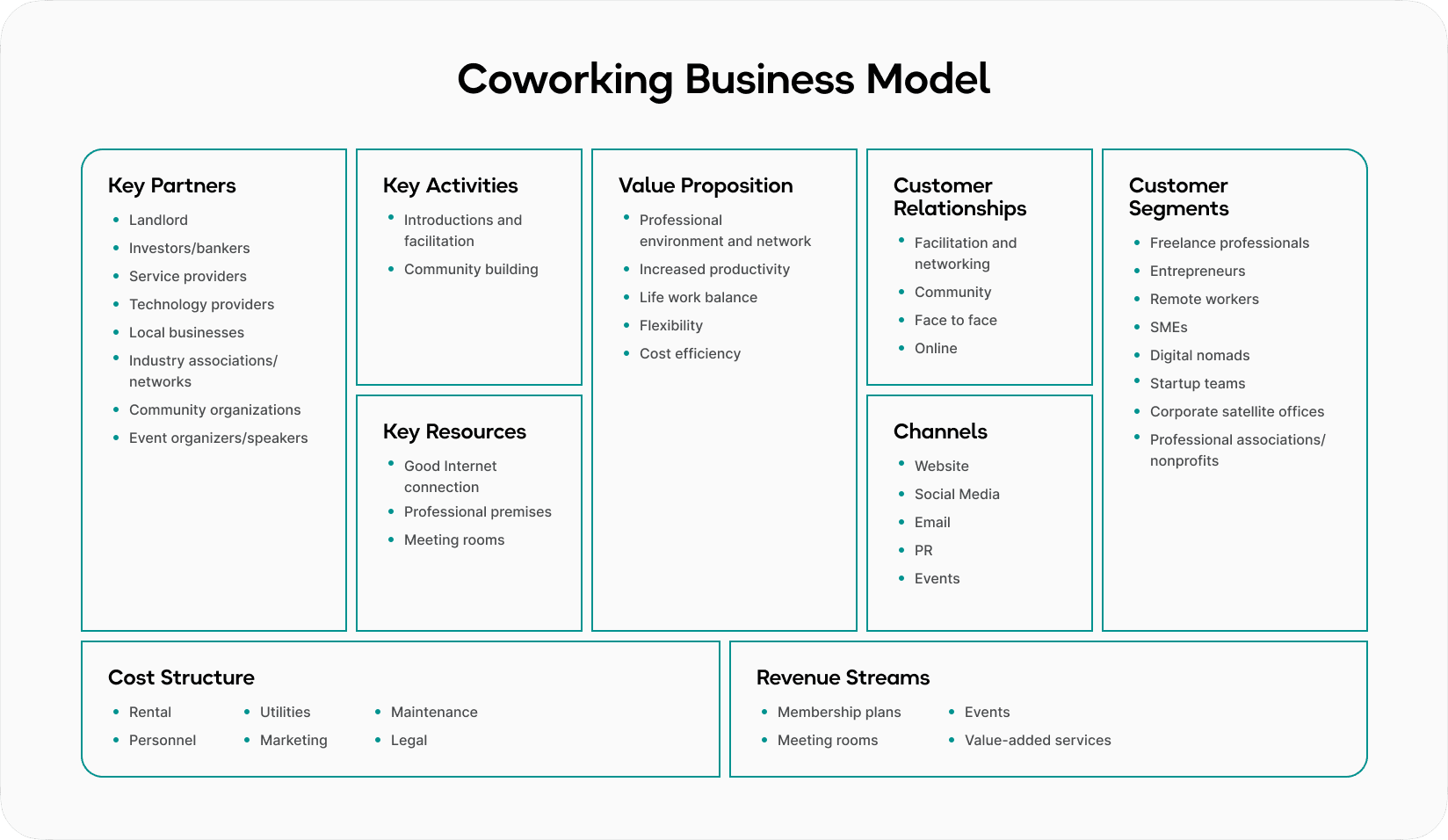
Most spaces make money from a mix of:
- monthly memberships
- hot desks
- dedicated desks
- private offices
- meeting rooms
- day passes
- virtual office services
- event space rental
- mail handling
- lockers
- printing
- add-on services
That mix matters because the business becomes healthier when revenue comes from multiple streams.
- Private offices can add stability.
- Meeting rooms can be high-margin.
- Virtual office plans can be efficient revenue.
- Memberships create recurring income.
- Events can activate dead hours.
Operators who think only in terms of desk occupancy often underestimate the business.
The smartest coworking spaces are not just filling seats. They are building a revenue system around how modern people work.
What future owners usually underestimate
Let me save future operators some pain.
When people imagine opening a coworking space, they usually think about:
- the design
- the location
- the vibe
- the launch
- the brand
All important.
But the harder truth is that many spaces win or lose on less visible things:
- how easy it is to join
- how clearly pricing is structured
- how fast staff responds
- how simple booking feels
- how reliable access is
- how well the operator understands its best-fit member
- how many manual tasks eat up the team’s time
In other words, members notice the couches. But businesses survive on systems.
That’s one reason software matters more than many people think. When memberships, bookings, communication, and access are stitched together properly, the space feels calmer, more professional, and easier to scale.
The tiny wording detail that still matters
One quick note: coworking is now the standard spelling, without the hyphen. The AP Stylebook added or revised its entry for “coworking” in 2018, reflecting the closed-up form used widely in the industry.
This is a small detail, but it matters for publishing. “Co-working” looks older. “Coworking” looks current.
And if you’re building authority, small trust signals count.
FAQ
Q. What is coworking in simple words?
Coworking means people from different companies or professions working in the same shared space.
Q. What is a coworking space?
A coworking space is a business that gives people flexible access to desks, offices, meeting rooms, and amenities, usually through memberships or day passes.
Q. What is the main purpose of a coworking space?
Its purpose is to make work easier: less isolation, less setup, more flexibility, and a more professional environment.
Q. Who uses coworking spaces?
Freelancers, remote workers, startups, consultants, small businesses, and larger teams all use coworking spaces.
Q. How do coworking spaces make money?
Usually through memberships, desks, offices, meeting rooms, day passes, virtual office plans, event rentals, and other add-on services.
Q. Is coworking still growing?
Yes. Flexible workspace continues to attract demand from both individuals and larger companies looking for more adaptable office options.
The bottom line
A coworking space is not just a place where people sit near each other with laptops.
It is a flexible workspace business.
When it works, it gives members something they genuinely want: a better way to work. And it gives operators something they genuinely need: recurring revenue from a product people keep choosing.
That’s why coworking matters.
Not because it’s trendy.
Because, for the right audience, it solves a real problem.